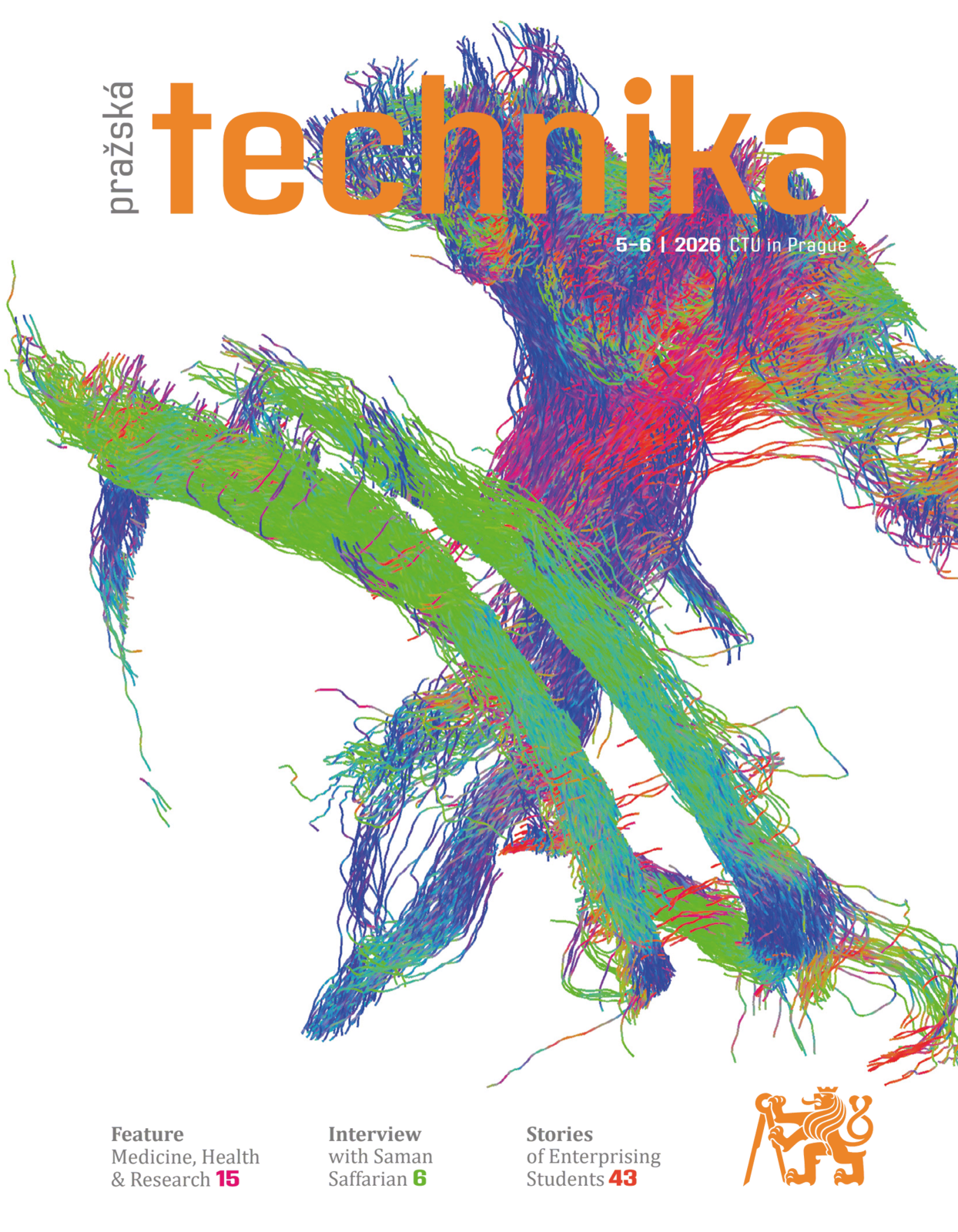
The human brain is an extraordinarily complex network of connections. Some of its most important pathways are difficult to observe using conventional imaging methods, even though changes within them may provide valuable clues about neurological conditions. One such network is the cholinergic system, which plays an important role in attention, memory and cognitive flexibility. In his contribution to the latest issue of Pražská technika, Milan Němý, who leads a neuroscience research group at the Czech Institute of Informatics, Robotics and Cybernetics (CIIRC CTU), explains how his team is developing new ways to study these pathways by combining advanced magnetic resonance imaging (MRI) with artificial intelligence.
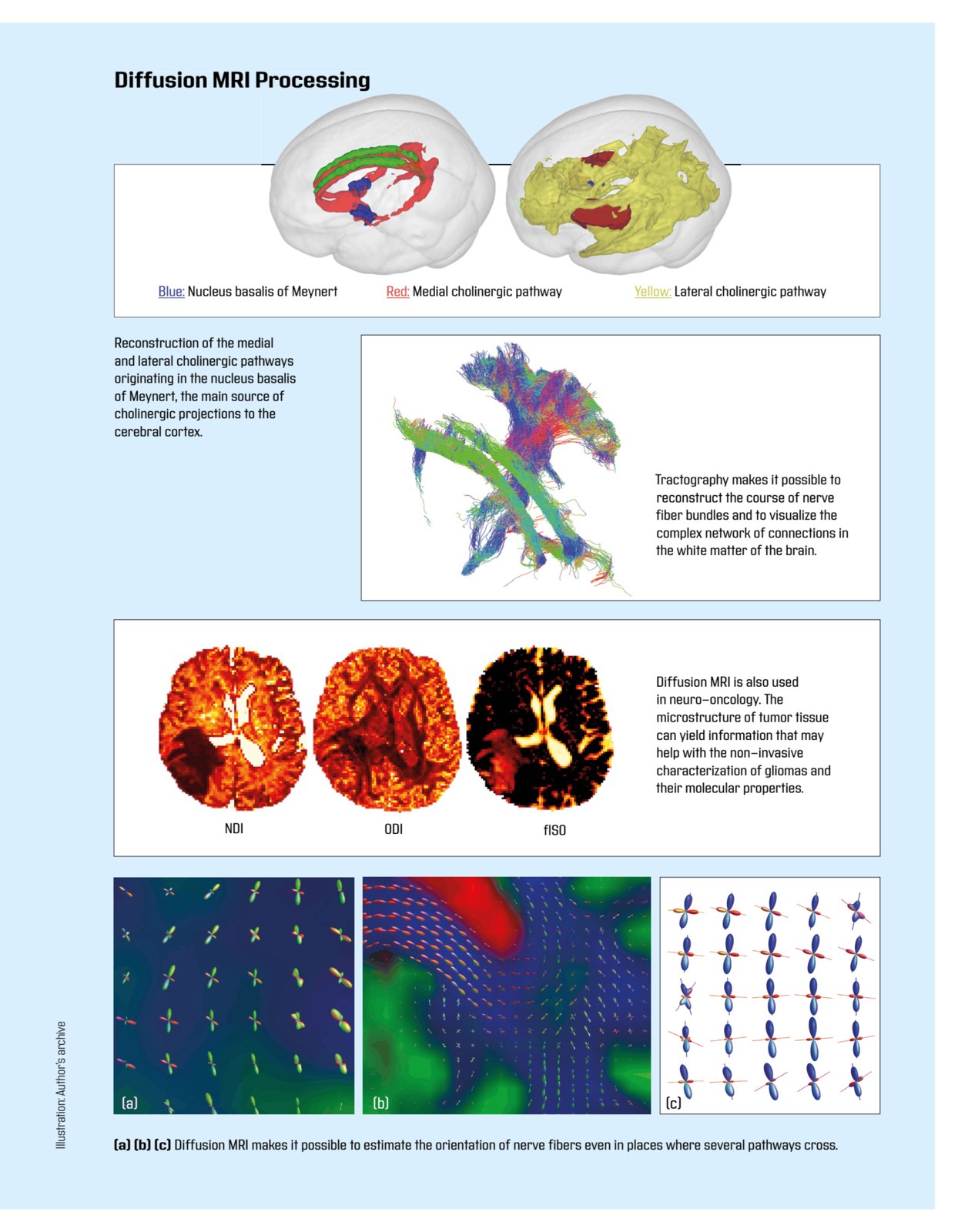
A particular focus of the research is the use of diffusion MRI and AI-supported analysis to identify and quantify the integrity of cholinergic white matter pathways directly in living people. The team has developed advanced segmentation methods that make it possible to study these complex structures in greater detail than was previously achievable with conventional approaches. This is particularly relevant to Alzheimer's disease, where changes in the cholinergic system may contribute to cognitive decline. By improving our understanding of these pathways, researchers can investigate early disease-related processes that might otherwise remain difficult to detect. The longer-term ambition is to gain deeper insight into brain vulnerability and support the development of more sensitive approaches to studying neurodegeneration.
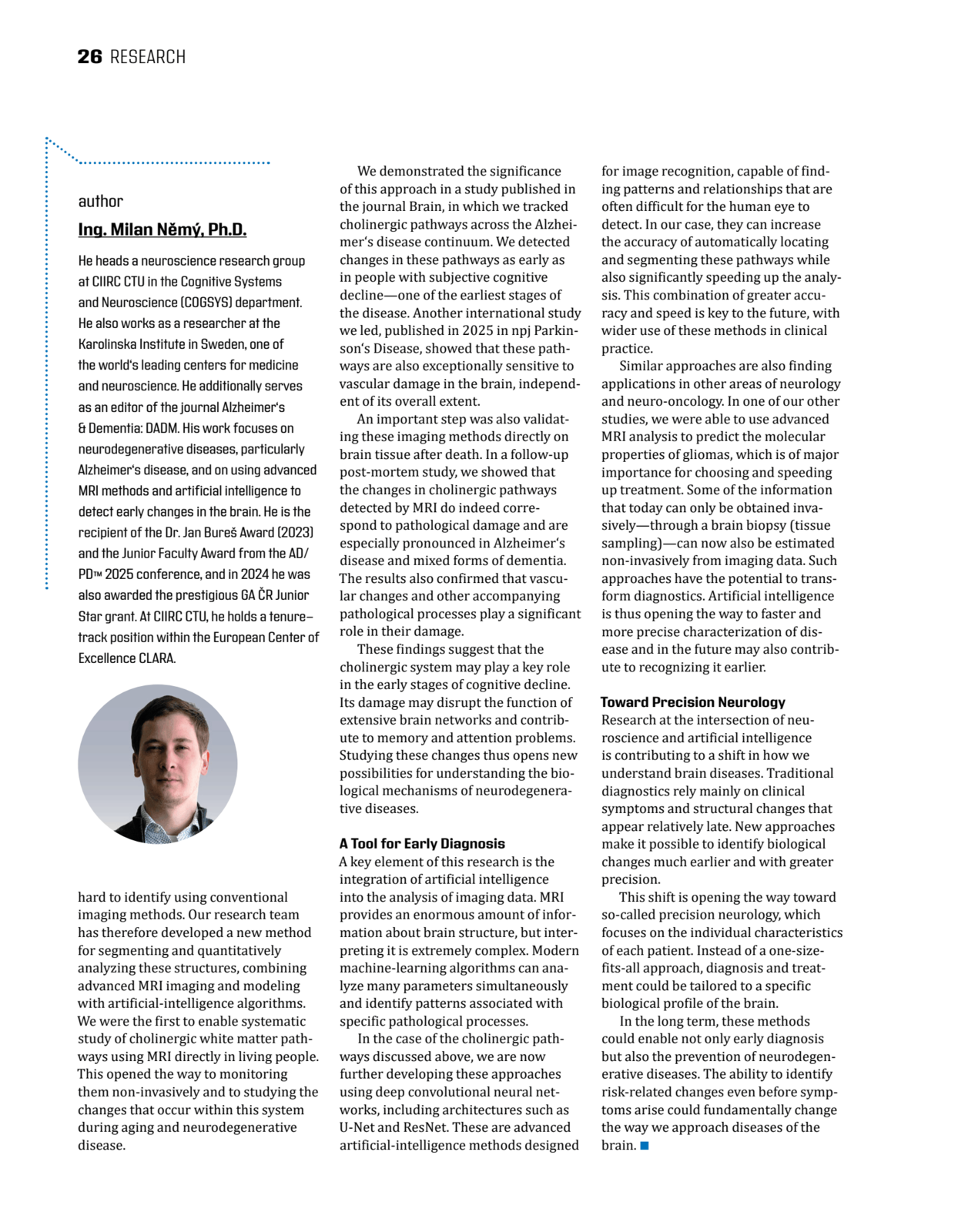
As a CLARA Tenure Track Position Holder, Milan Němý is developing his research at the intersection of artificial intelligence, advanced imaging and neuroscience. His work reflects the interdisciplinary approach at the heart of CLARA, bringing together expertise in AI and brain research to address complex questions with implications for human health. Read more about Milan Němý's research in the latest issue of Pražská technika.