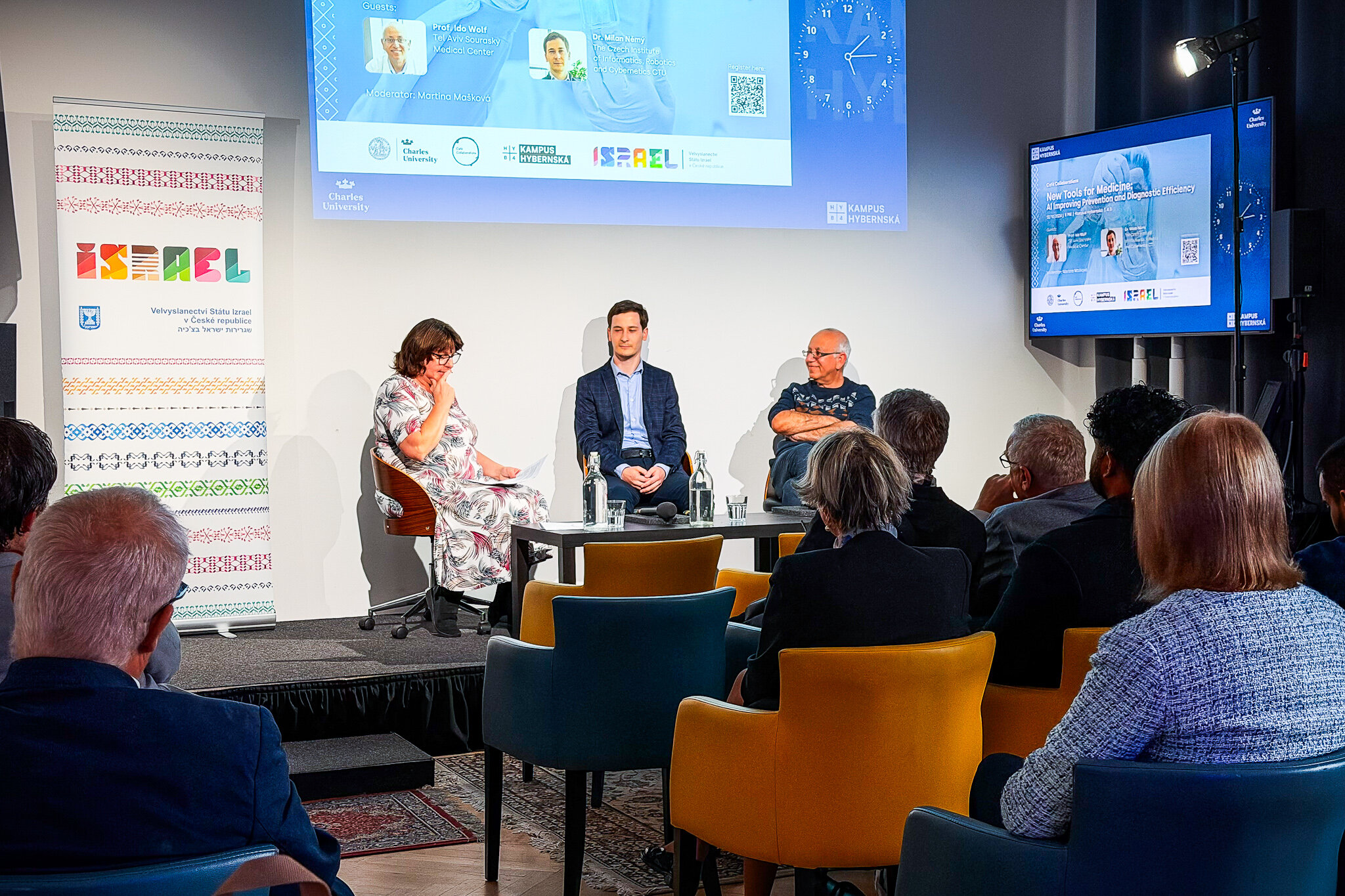
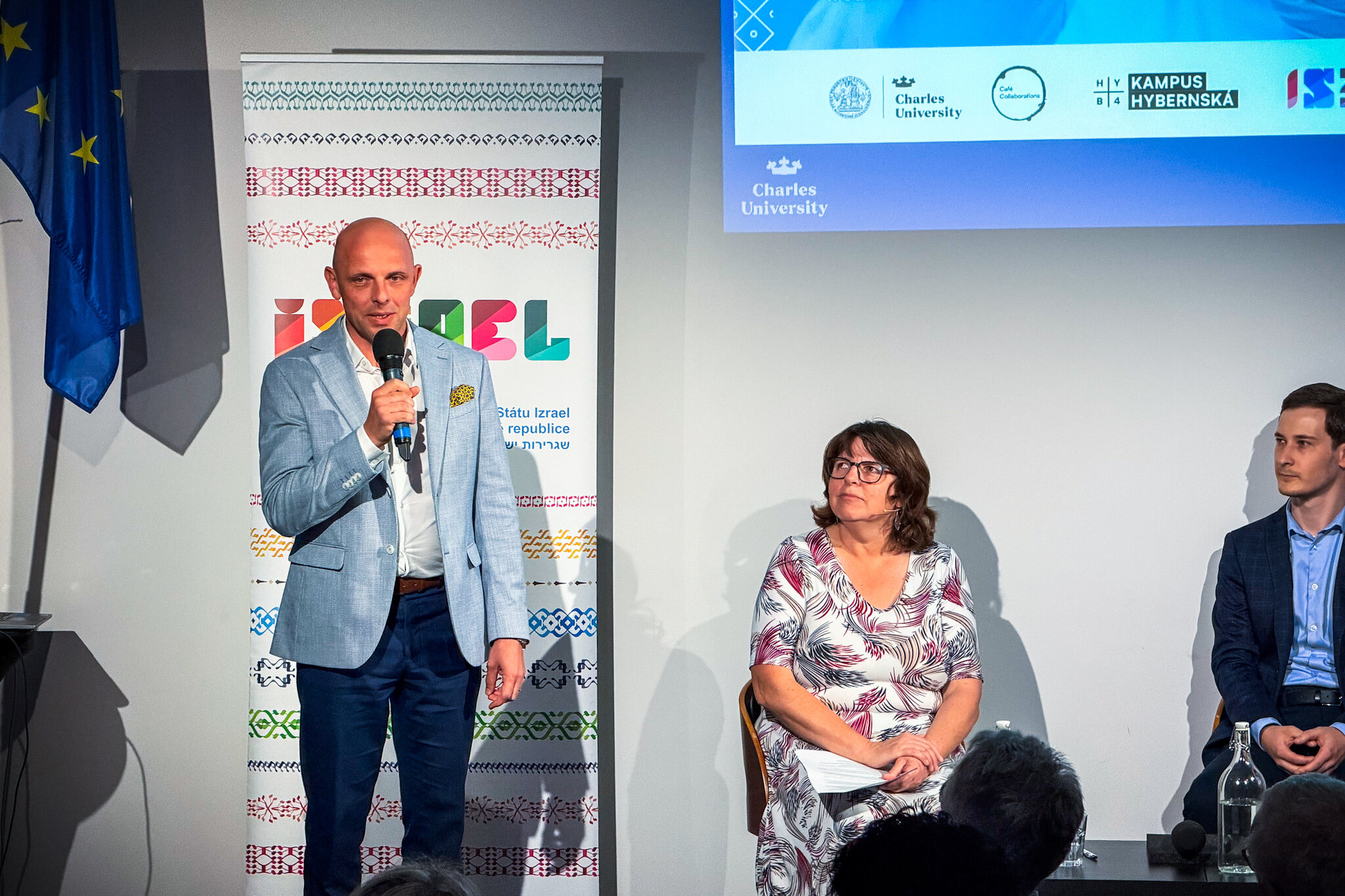
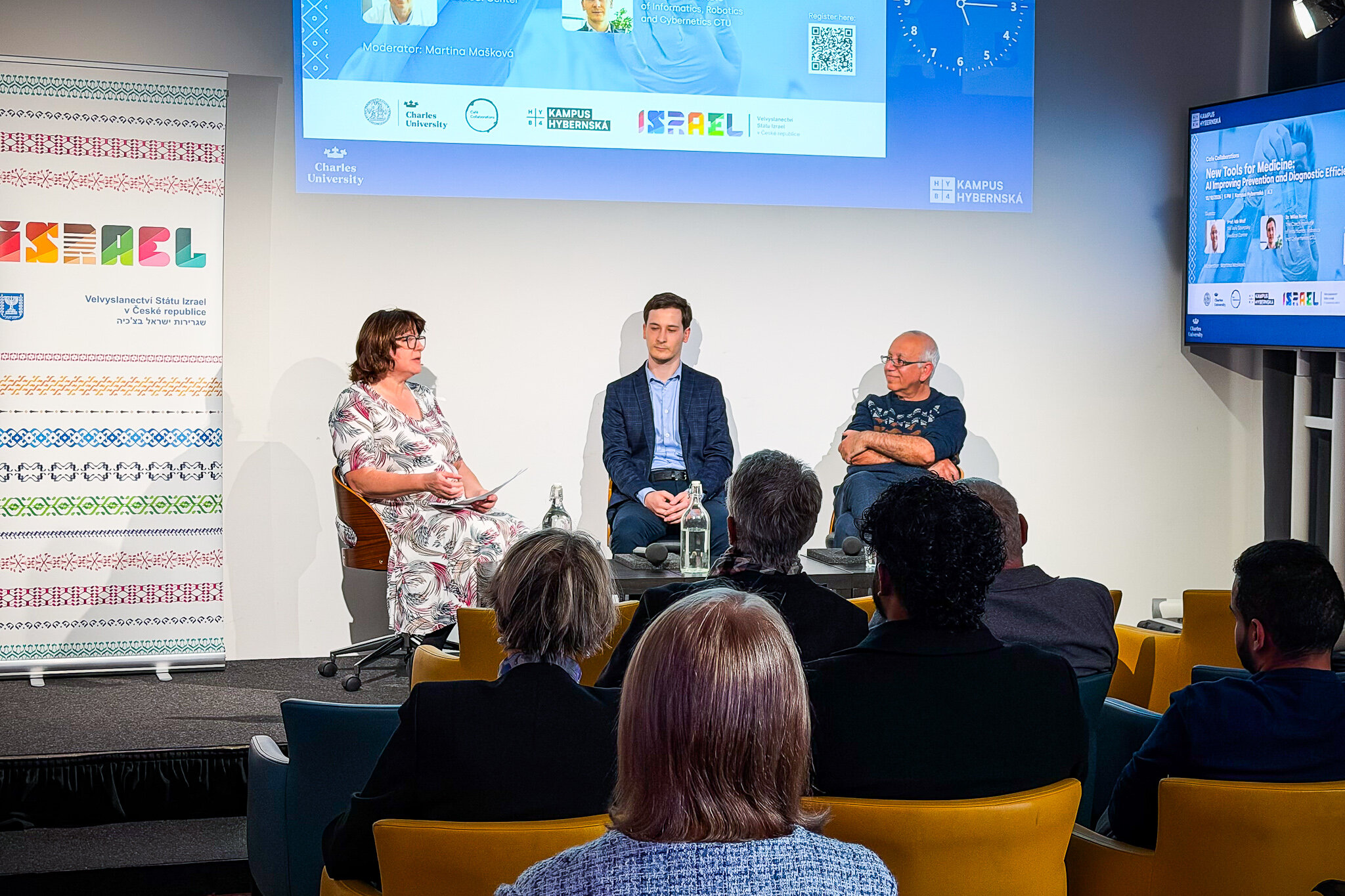
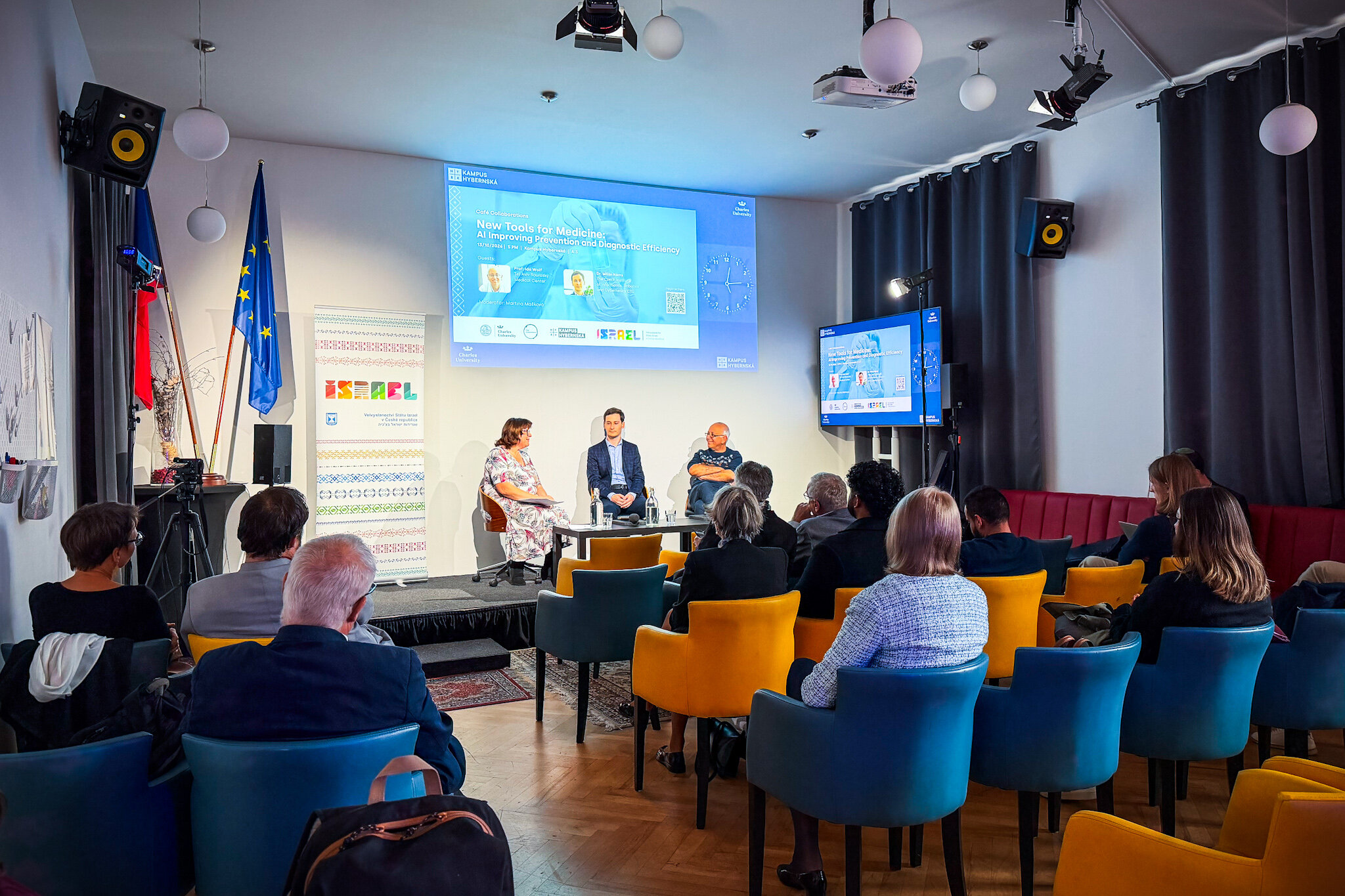
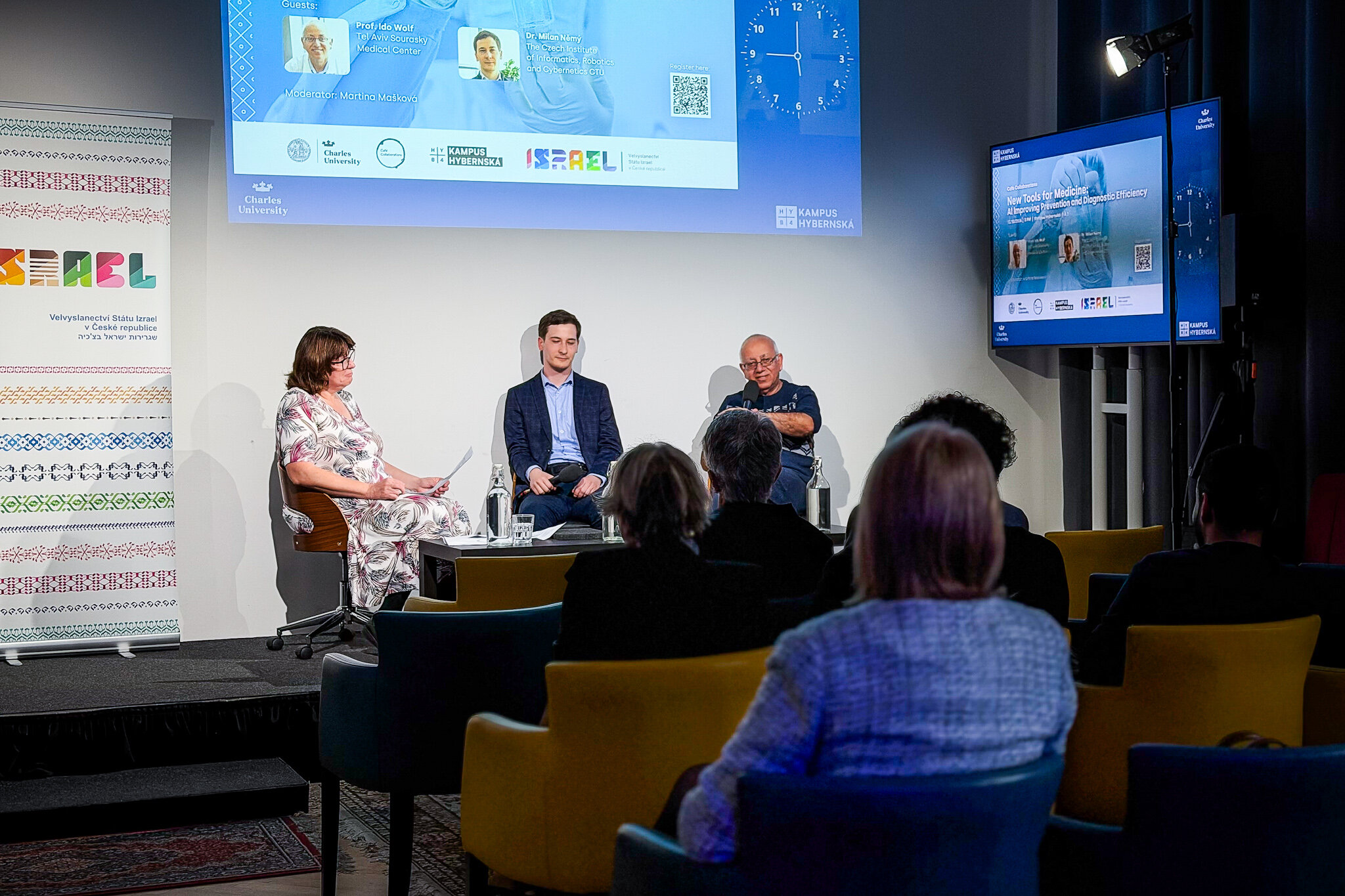
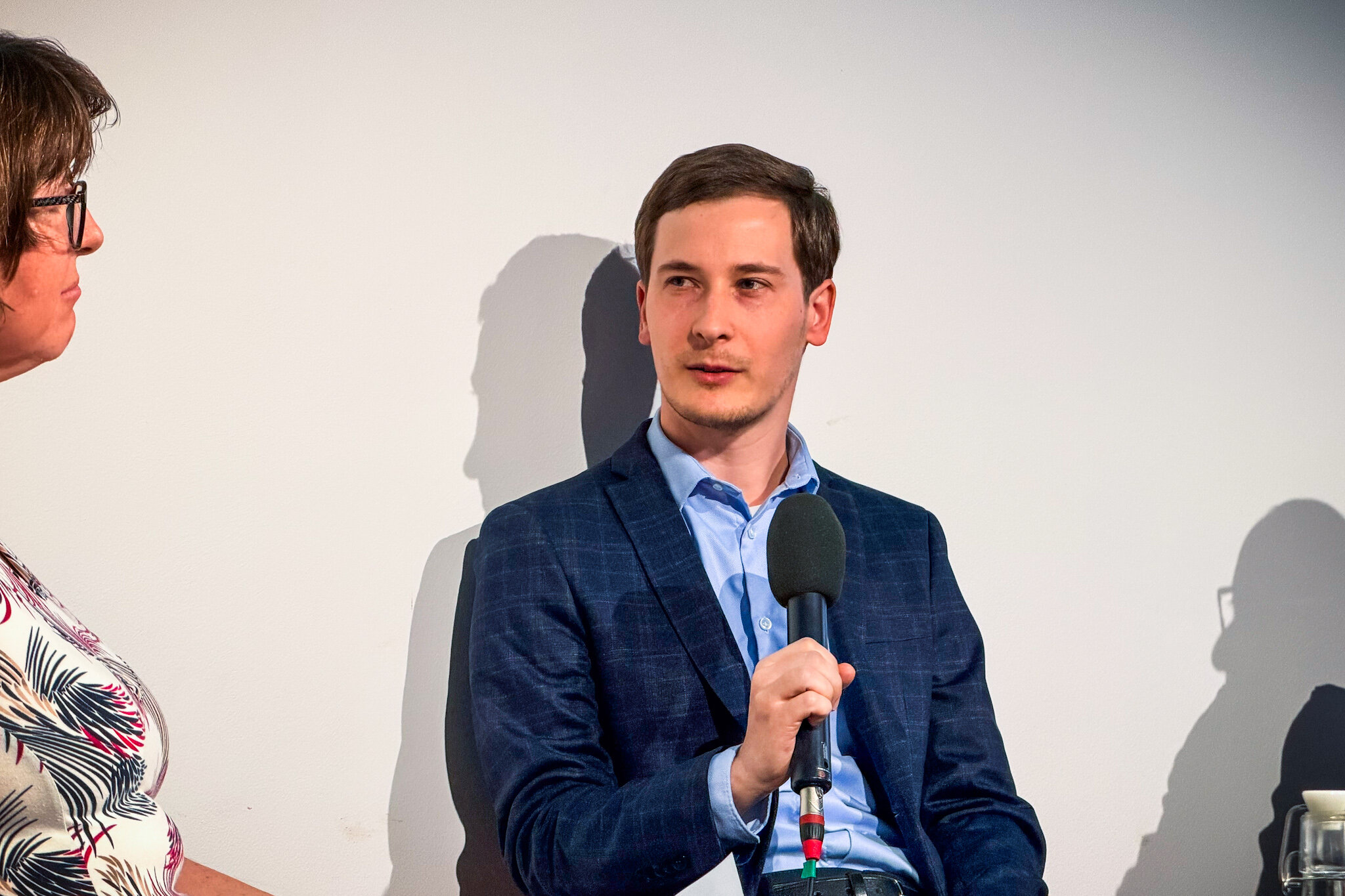
How can artificial intelligence help identify disease-related changes before they become visible? What can advanced imaging reveal about the human brain? And how might AI contribute not only to medical diagnosis, but also to the education of future healthcare professionals? These questions brought together researchers and the public at Café Collaborations: New Tools for Medicine – AI Improving Prevention and Diagnostic Efficiency, held on 13 October 2026 at Kampus Hybernská in Prague. One of the speakers was Dr. Milan Němý, CLARA Tenure Track Holder at CIIRC CTU, who shared his expertise in neuroimaging, computational neuroscience and artificial intelligence.
Understanding the brain through AI and advanced imaging
One of the most promising applications of artificial intelligence in medicine lies in the early detection and understanding of neurodegenerative diseases. Conditions such as Alzheimer's disease can involve changes in the brain long before the first clinical symptoms become apparent. Detecting and interpreting these subtle changes is therefore an important challenge for medical research. Combining AI with modern magnetic resonance imaging (MRI) methods offers new ways to investigate this process. By analysing patterns in brain structure and connectivity, computational methods can help researchers identify changes that might otherwise be difficult to detect and gain deeper insights into how neurodegenerative diseases develop.
This is closely connected to the research of Milan Němý, whose work focuses on developing advanced imaging and computational methods to study the human brain and neurodegenerative diseases. With a background in cybernetics, robotics and biomedical engineering, he works at the intersection of neuroimaging, computational neuroscience and AI. Alongside his tenure-track position at the CLARA Center of Excellence, he is also a researcher at Karolinska Institutet in Sweden.

Two perspectives on the future of medicine
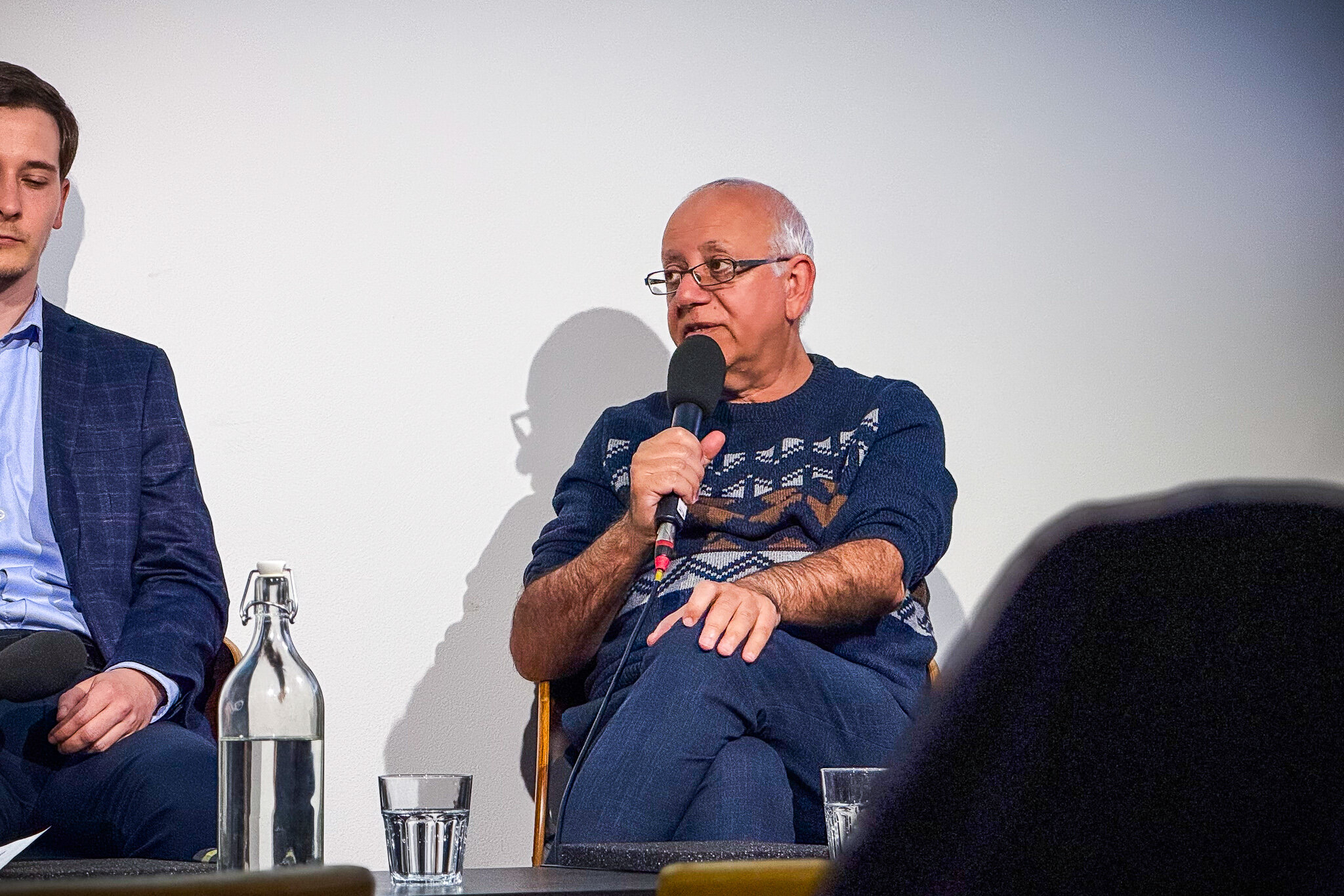
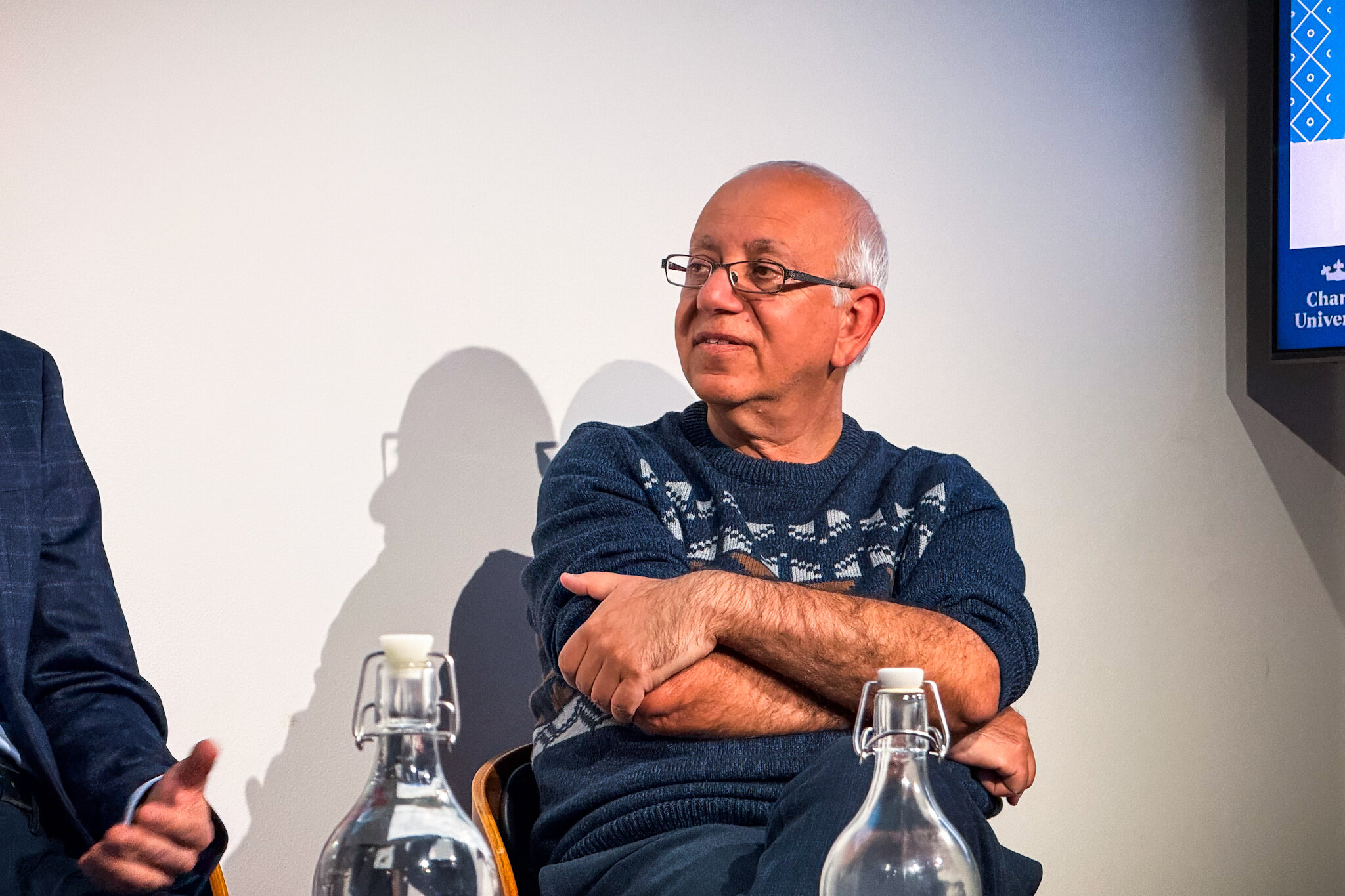
The discussion also brought in a perspective from oncology. Prof. Ido Wolf, an Israeli physician, medical oncologist and researcher with more than three decades of experience, joined Milan Němý to explore the growing role of artificial intelligence in medicine. His professional work combines clinical oncology, cancer research, medical education and healthcare leadership.
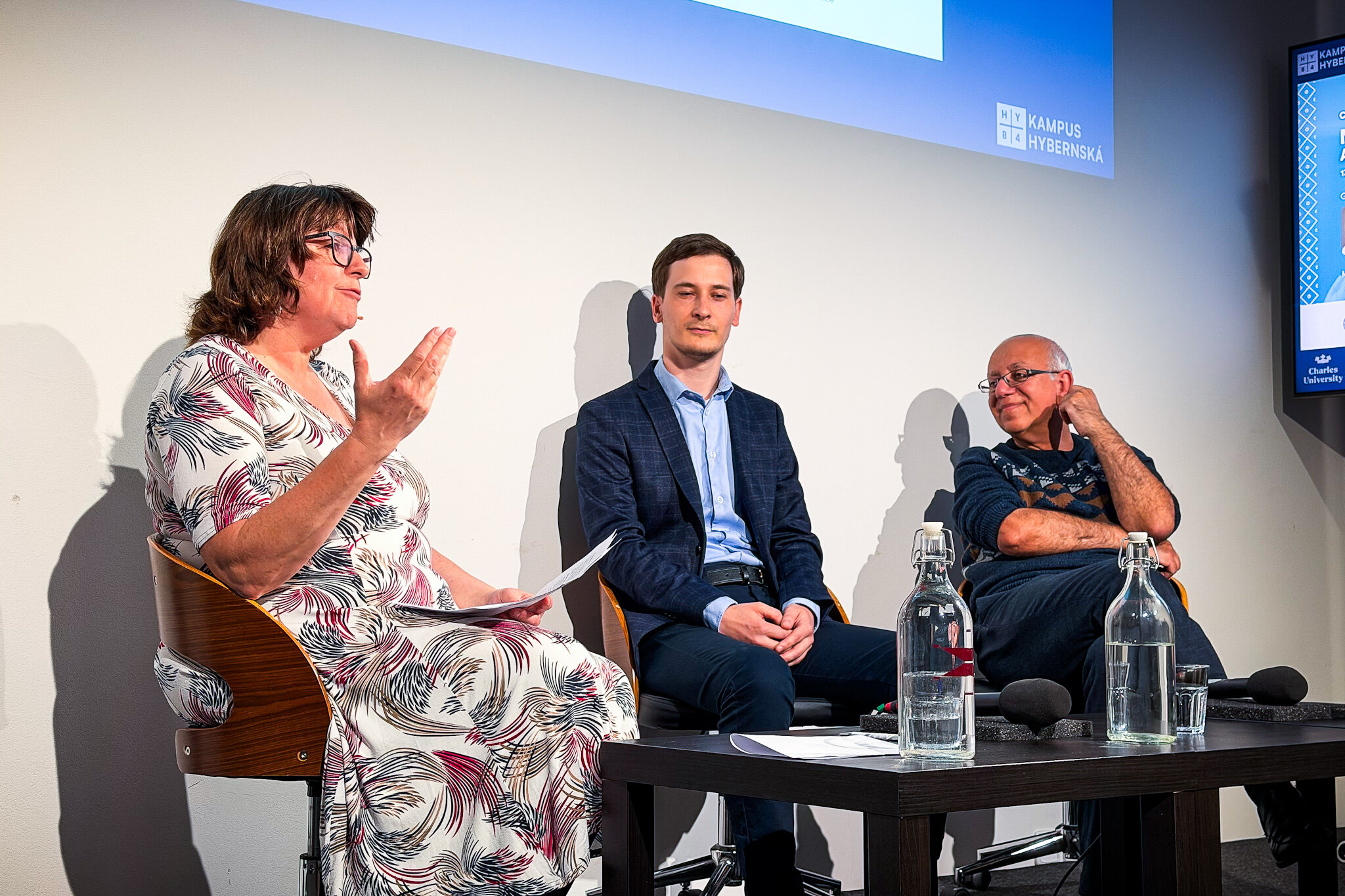
While their research backgrounds differ, both speakers addressed the opportunities that new technologies bring to prevention, diagnosis and medical practice. The conversation also touched on the potential of AI in university education and professional training, where intelligent tools could support new ways of learning and preparing future healthcare professionals. The discussion was moderated by Martina Mašková, Czech Radio presenter, producer and science communicator, who guided the conversation and the subsequent exchange with the audience.
Connecting research with the public
Café Collaborations is part of the CLARA Collaboratorium, an initiative that creates opportunities to bring scientific research beyond academic institutions and into conversations with wider audiences. By connecting experts from different fields and inviting the public to take part, these events help make complex research topics more accessible and encourage dialogue about the ways new technologies may shape society.
We would like to thank both speakers for sharing their knowledge and perspectives, Martina Mašková for moderating the discussion, and Hyb4City and Kampus Hybernská for making the event possible. We also thank everyone who joined us for the evening.